Your first yarn and hook: a simpler shopping list
Choose easy-to-see yarn, a comfortable hook and a small set of essentials for your first crochet practice.
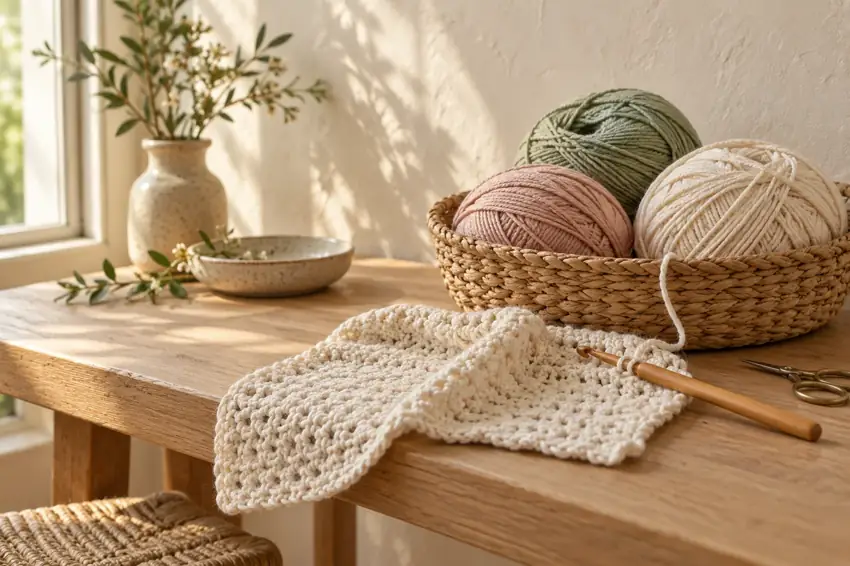
Choose a yarn you can actually see
For early practice, smooth yarn in a light or medium solid color makes it easier to find the top of each stitch. Dark shades, eyelash yarn and very fluffy textures can hide the loops you are trying to learn. A yarn that splits easily may also make a first session frustrating. You do not need an expensive collection: one suitable ball is enough to start.
A medium-weight yarn is a practical starting point for many learners. Weight describes the yarn’s thickness category, not the weight of the ball. Two balls with the same number of grams can contain very different lengths of yarn. Check both the yarn category and the length when comparing supplies.
Let the label narrow your choices
Look for fiber content, ball weight, yardage or meterage, suggested hook sizes and care instructions. The hook recommendation gives you a useful starting range; it does not promise that your stitches will match a specific pattern. Your hand tension, stitch choice and project all affect the fabric.
Use the metric hook size printed in millimeters when possible. Letter and number naming systems can vary. Keep the label until your project is finished so you can repeat the yarn choice and remember how to wash it. If matching color matters, check the dye lot when buying multiple balls.
Choose fiber for the job
Smooth acrylic is often an accessible option for general practice. Cotton can give clear stitch definition and works well for many household projects, though some learners find its lower stretch less forgiving. Wool and wool blends can feel springy, but care needs and skin sensitivities vary. Read the particular yarn’s label rather than assuming every yarn in a fiber category behaves the same way.
For a first practice swatch, prioritize visibility and comfort over a finished-product goal. For a real project, choose fiber for the intended use. A decorative yarn is not automatically suitable for an item exposed to heat, heavy wear or frequent washing.
Buy a comfortable hook, not every hook
Pick a hook within the yarn’s suggested range and try holding it before buying if that is possible. A handle that feels comfortable to one person can feel awkward to another. Smooth joins and a hook head that moves through the yarn without snagging matter more than the size of a set.
Begin with short sessions and relaxed hands. If your work is so tight that the hook is difficult to insert, first loosen your grip and practice making consistent loops. A different hook size may help, but changing sizes also changes the fabric. Do not force the hook or keep working through pain.
A small kit is enough
Add scissors, a blunt yarn needle and a few removable stitch markers. A ruler or measuring tape becomes useful when checking a swatch. Keep the working yarn, label and hook together so you can resume without guessing.
- One ball of smooth, visible yarn.
- One hook in the recommended metric size range.
- Scissors and a blunt yarn needle.
- Removable stitch markers.
- A ruler, plus a note of the yarn and hook used.
Make a practice swatch before buying more
Try a small rectangle and notice whether you can identify stitches, insert the hook comfortably and maintain similar loop sizes. For a pattern with a stated gauge, make and measure the specified gauge swatch; follow any instructions for washing it first. A successful practice session is better evidence for your next purchase than a large basket of supplies.